
Artificial Grass & Turf Installation Los Angeles: 2026 Guide
August 24, 2026
Outdoor Lighting Los Angeles: Cost, Ideas & Installation
September 7, 2026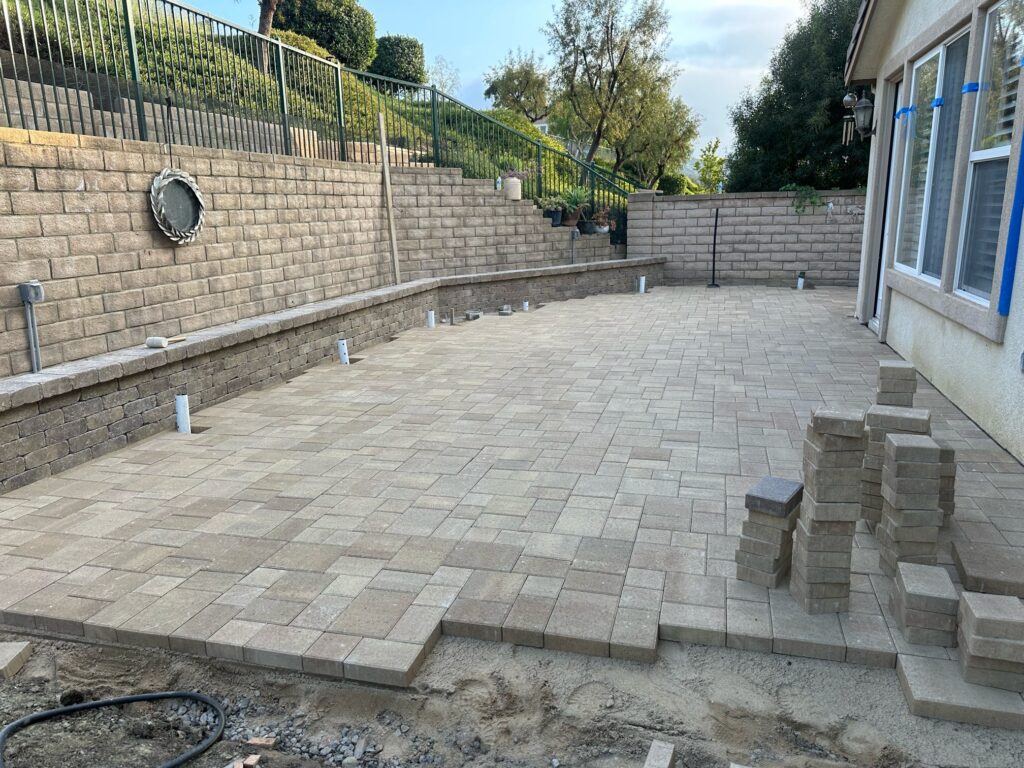
Best Pavers for Los Angeles Backyards: Materials, Costs & Design Ideas
What are the best pavers for Los Angeles backyards? Concrete pavers are a flexible choice for most patios and walkways. Exterior-rated porcelain suits a sleek modern design. Travertine and other natural stones add texture and warmth, while driveway-rated concrete or clay pavers can handle vehicle traffic when installed over the right base. The best choice depends on how you use the space, the look of your home, drainage, sun exposure, and budget.
At Green Advisor Inc., we help homeowners plan outdoor spaces that connect patios, pools, paths, and outdoor kitchens. This guide explains how to compare paving materials and what to ask before starting paver installation in Los Angeles.
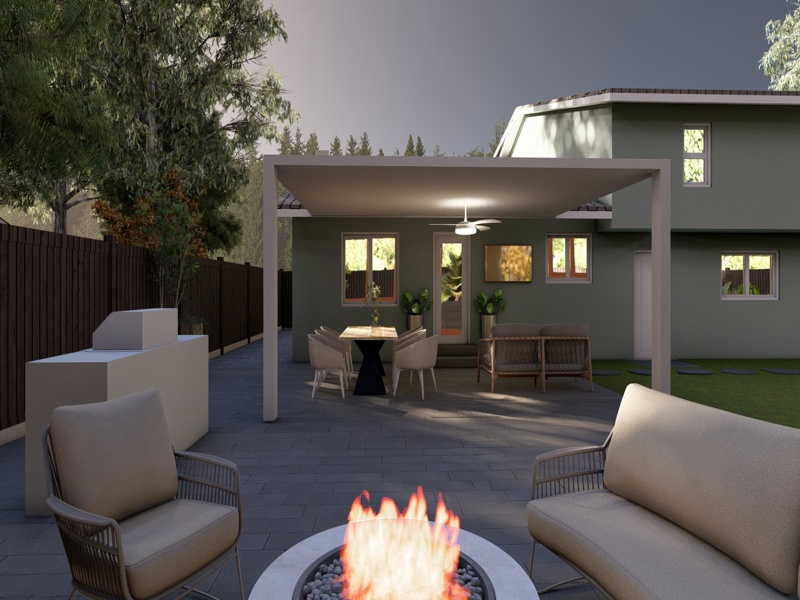
Quick Comparison: Which Paver Material Fits Your Backyard?
| Material | Best for | Main benefit | What to check |
|---|---|---|---|
| Concrete pavers | Patios, paths, driveways | Many colors, shapes and price points | Base, joint care and load rating |
| Outdoor porcelain | Modern patios and pool areas | Low water absorption and clean lines | Exterior rating, slip resistance and support |
| Travertine | Pool decks and natural-style patios | Warm stone appearance | Finish, sealing guidance and heat |
| Other natural stone | Garden paths and custom patios | Unique texture and color | Stone type, thickness and care |
| Clay brick | Traditional paths and driveways | Classic color and pattern | Vehicle rating and installation system |
These are general comparisons, not a substitute for checking the exact product. For example, a patio-rated unit may not be suitable for a driveway.
Why Pavers Work Well in Southern California
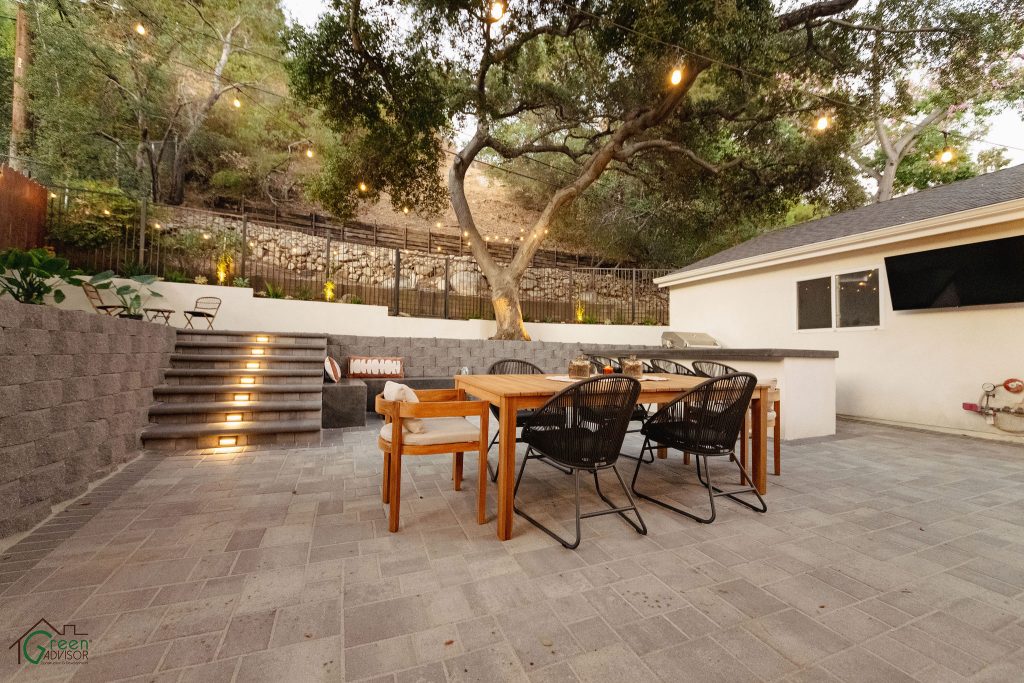
Los Angeles yards often combine dining areas, pool decks, side paths and planting beds. Pavers help define these zones without making the yard feel disconnected. In addition, homeowners can choose patterns that fit Spanish-style, modern, Mediterranean or traditional homes.
Individual units can often be lifted for repairs. However, pavers are not automatically permeable, and good drainage still matters. Our pavers and masonry services can be planned alongside the full outdoor layout.
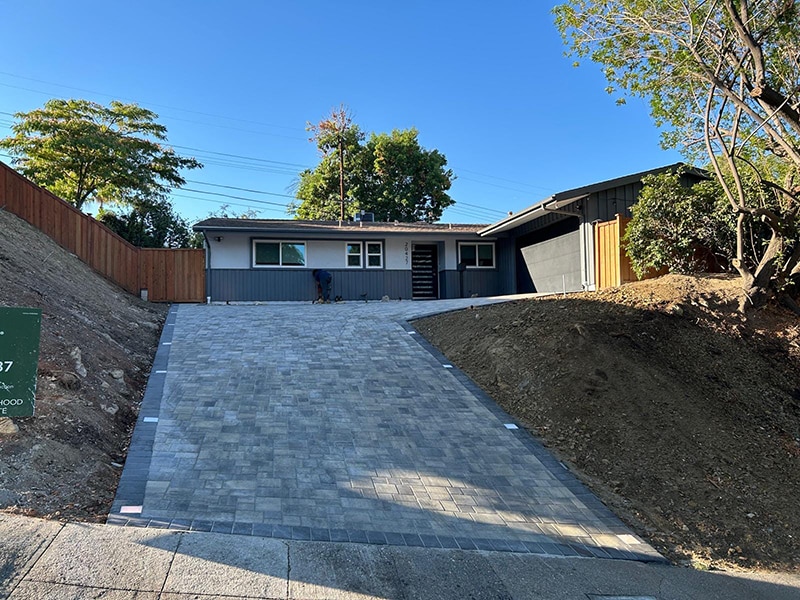
Concrete Pavers: A Versatile Option for Patios and Driveways
Concrete pavers suit many Los Angeles projects because they come in a broad range of sizes, finishes and colors. For instance, large rectangular units can create a modern patio, while smaller units work well in a traditional walkway.
For driveways, select a system rated for vehicle loads. The contractor should also plan excavation, base depth, compaction, edges and runoff. As a result, the installation matters just as much as the paver you see.
Porcelain Pavers: Clean Lines for Modern Backyards
Outdoor porcelain offers a neat, consistent look and often resists water absorption. It can resemble natural stone or concrete. However, indoor tile and exterior paving products are not interchangeable. Choose an exterior-rated product and follow the maker’s approved installation method.
Near pools, check the specific finish for wet slip resistance. Also, ask how the material will be supported and how surface water will drain.
Travertine and Natural Stone Pavers
Travertine is often used around pools and homes with warm, natural finishes. Other choices include flagstone, limestone, slate and granite. Each stone has its own look, surface feel and care needs.
Before choosing stone, compare samples outdoors in direct sun and shade. Also, ask about thickness, slip resistance, staining and the maker’s sealing advice. Some finishes can be slippery when wet.
Brick and Clay Pavers
Clay pavers bring a classic look to courtyards, garden paths and some driveways. Their rich tones can pair well with traditional architecture. Still, choose units made for the planned use, especially where cars will park or turn.
Best Pavers for a Backyard Patio
Start with how you plan to use the patio. A dining area needs enough room for chairs to move. A lounge needs easy access from the house. Meanwhile, a BBQ area needs clear walking paths and safe spacing around cooking equipment.
Next, compare samples with the home’s stucco, doors, walls and plants. For a full project, review our Los Angeles backyard remodeling services and backyard planning guide.
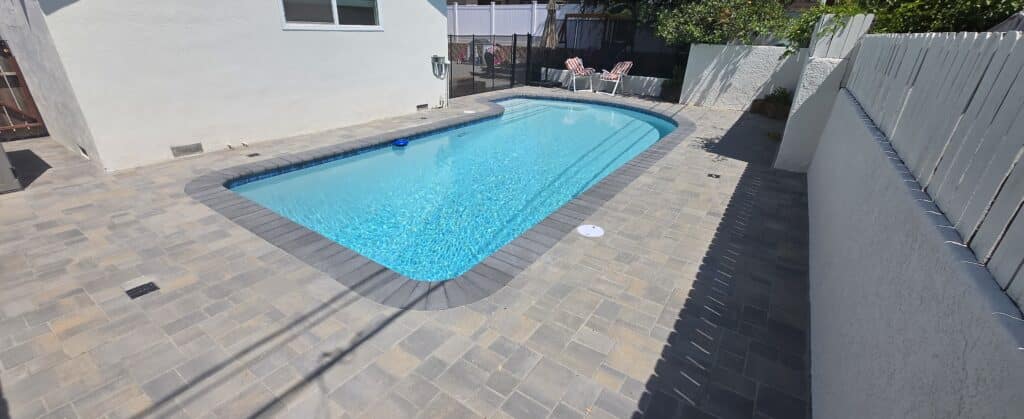
Best Pavers for Pool Decks
For pool decks, safety and comfort come first. Compare wet slip resistance, surface texture, heat in direct sun, drainage and how the pavers meet the pool coping. Concrete, exterior porcelain and suitable natural stone can all be options.
Light-colored surfaces may feel more comfortable in strong sun, but actual heat depends on the product and conditions. Therefore, test a sample if possible. Plan the paving at the same time as pool design and construction so coping, drains and finished heights line up.
Best Pavers for Driveways
Driveway paving must handle vehicle weight, turning forces and runoff. In many cases, interlocking concrete or suitable clay pavers are practical choices. Yet the right thickness and base depend on the site and product.
On sloped lots, the plan may also need retaining walls, steps or added drainage. See our complete driveway and yard remodeling project in Los Angeles for an example of a larger outdoor plan.
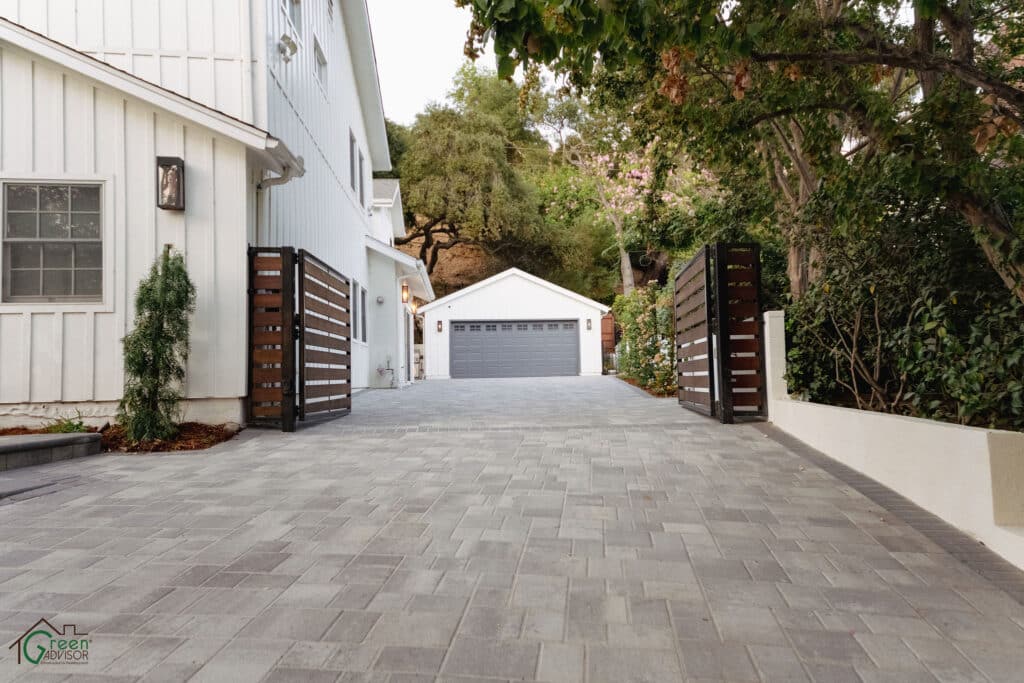
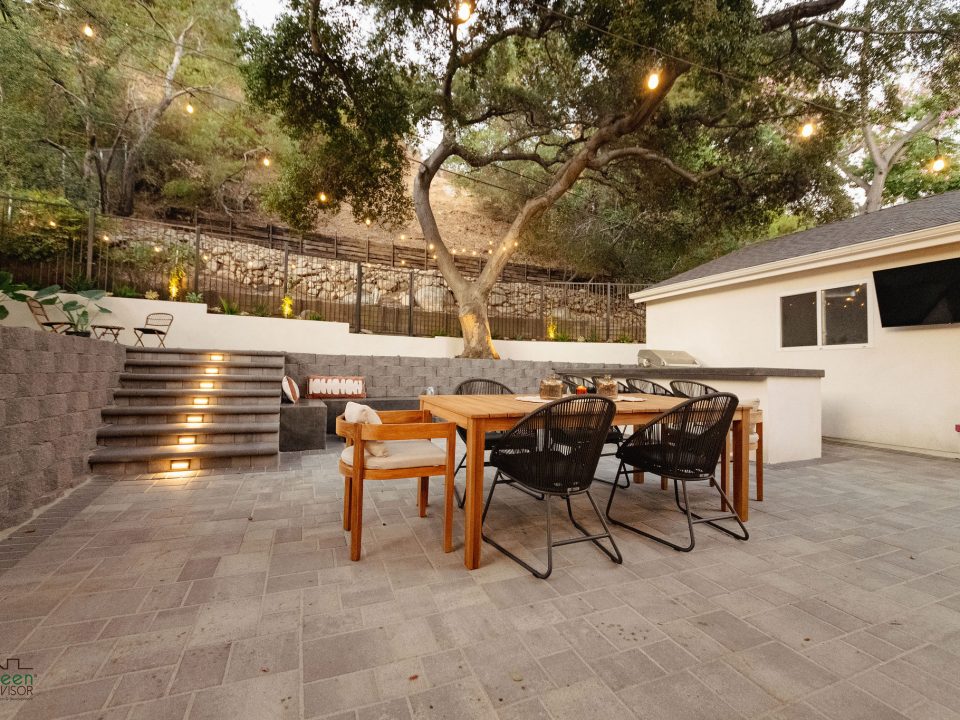
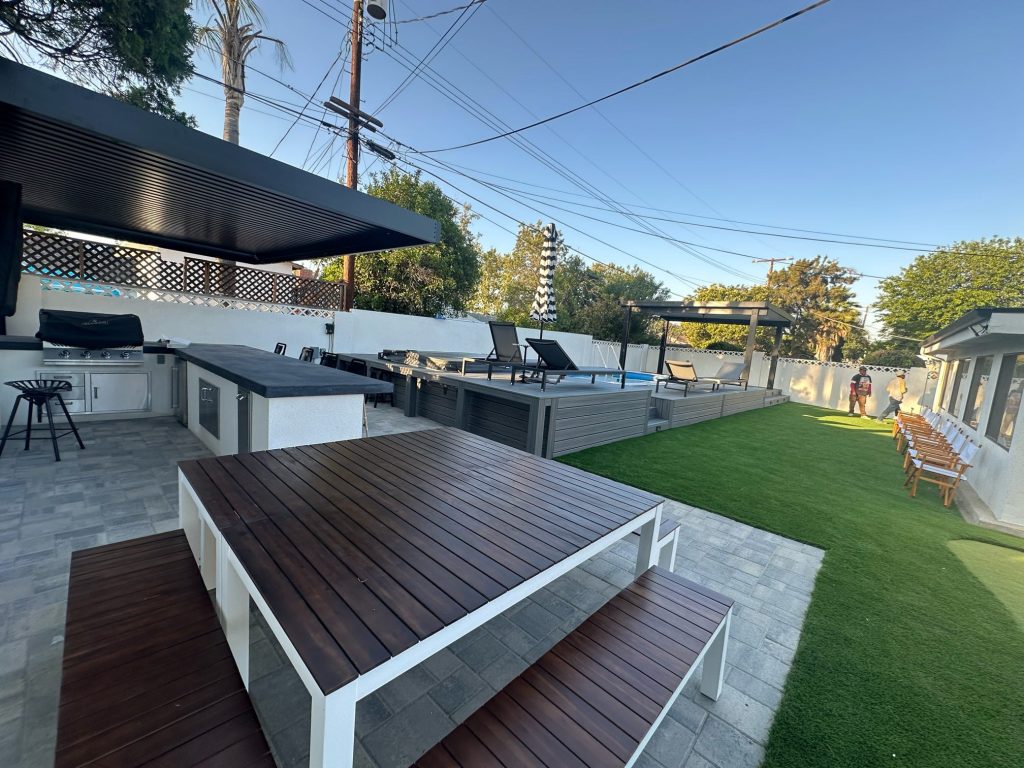
Design Ideas: Pavers With Turf, Pools and Outdoor Kitchens
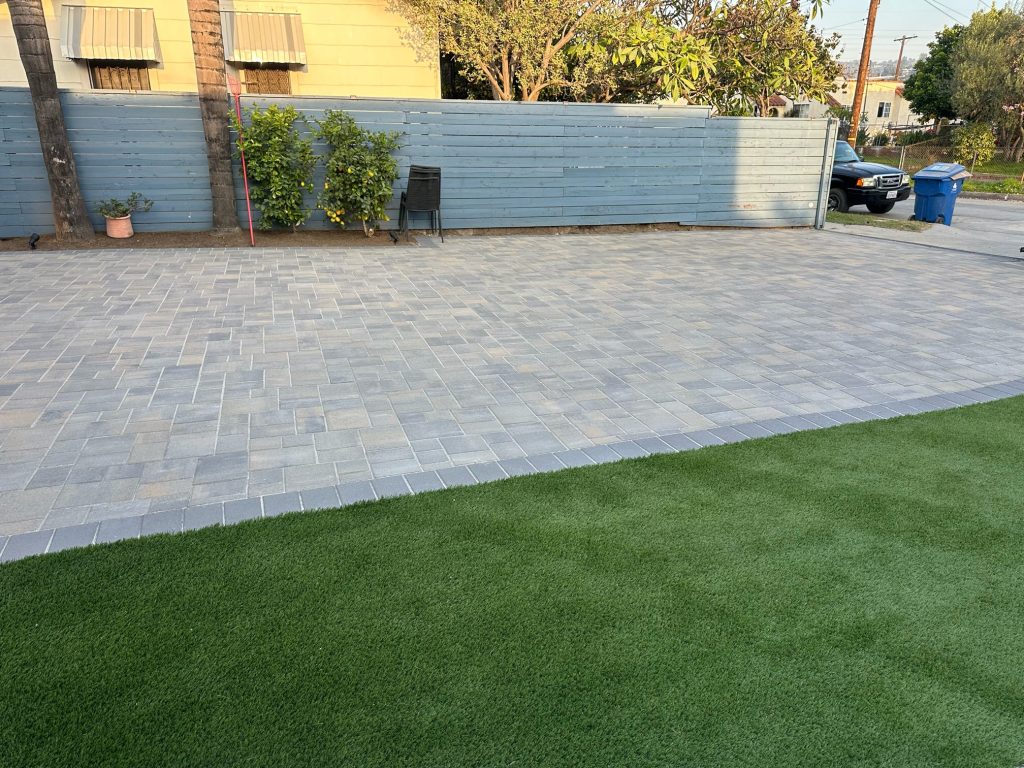
Large-format pavers with turf strips can create a crisp modern look. In contrast, stone with planted borders creates a softer garden feel. Either approach works best when the team plans the full yard before installation.
For example, artificial grass installation needs coordinated edges, heights and drainage. Similarly, outdoor kitchen construction may require gas, electrical or water lines before the final pavers go in.
A well-planned landscape design also keeps room for trees, shade, plants and outdoor lighting rather than covering the entire yard with paving.
How Much Does Paver Installation Cost in Los Angeles?
There is no single price that fits every paver project. A simple level patio is different from a steep driveway or pool deck with new drains. In addition, labor and site access can change the total cost.
Key cost factors: paver material, square footage, removal of old surfaces, excavation, base work, slope, drainage, borders, cuts, stairs and access for crews and deliveries.
When comparing quotes, ask what is included beneath the finished pavers. A lower price may not include the same base work, drainage or edge restraints. Therefore, compare the full scope rather than only the material cost.
What Goes Under Pavers?
Most paving systems need prepared soil, a suitable compacted base, bedding, paving units, joints and edge support. However, the exact layers change with soil, traffic, drainage and the maker’s directions.
First, the contractor checks grades and runoff. Next, the team prepares the base and sets the surface. Finally, they complete joints, edges and cleanup. Skipping base work can lead to uneven paving or movement over time.
Drainage and Permeable Pavers
Water should move away from the home and toward an approved drainage route. This is especially important on hillside lots, near retaining walls and around pools.
Permeable pavers are part of a special paving system that lets rainwater pass through joints into prepared layers below. They are not simply regular pavers with wider gaps. The U.S. EPA guide to permeable pavement explains how these systems help manage stormwater. You can also explore EPA green infrastructure options.
Pavers vs. Poured Concrete: Which Should You Choose?
Pavers offer more patterns and allow many individual units to be replaced. Poured concrete, on the other hand, creates a continuous surface and may suit a simpler design or different budget. Both need sound site preparation and drainage.
Choose based on the full project: style, use, maintenance, repair access and cost. For example, a homeowner planning a detailed courtyard may prefer pavers, while another may choose a simple concrete slab.
How to Choose Paver Colors and Patterns
First, compare the material with the home’s exterior and nearby walls. Next, consider the amount of sunlight and the size of the space. Finally, view a sample outdoors before ordering.
Running bond and stacked layouts can look calm and modern. Herringbone adds movement and can suit some driveways when designed for the application. Meanwhile, mixed-size layouts can make a large patio feel more natural.
How to Maintain and Repair Pavers
Most paving benefits from regular sweeping and gentle cleaning. In addition, check joints, edges and any areas that settle. Use cleaners that match the material, and follow the maker’s advice on sealing.
Many individual pavers can be replaced. However, matching the color later may be hard if the product has changed or faded. Keeping a few spare units can help with future repairs.
What to Ask a Los Angeles Paver Contractor
- Is the product rated for my patio, pool deck or driveway?
- How will you prepare and compact the base?
- Where will rainwater drain?
- How will the new paving meet doors, steps and pool coping?
- Are borders, cuts, demolition and disposal included?
- What cleaning and sealing does the material need?
- What is the expected schedule, and are permits needed?
For a larger project, ask how the pavers will connect with your backyard design and remodeling plan.
Professional Paver Installation in Los Angeles
Green Advisor Inc. plans and builds patios, walkways, driveways, pool surrounds and complete outdoor spaces. Our work can bring together paving, landscape design, pools, turf and outdoor kitchens.
Explore our service areas, then contact Green Advisor Inc. about your paver project.
Frequently Asked Questions About Pavers in Los Angeles
What are the best pavers for Los Angeles backyards?
Concrete pavers are a flexible choice for patios and walkways. Exterior porcelain suits modern designs, while travertine and other natural stone offer a warmer look. The best option depends on use, drainage, style and budget.
What pavers are best around a swimming pool?
Choose an exterior-rated product with suitable wet slip resistance, drainage and a comfortable surface in the sun. Concrete, outdoor porcelain and some natural stones may work well.
How much does paver installation cost in Los Angeles?
Cost depends on material, area, access, demolition, base preparation, slope, drainage and design details. An on-site estimate is more useful than a single generic price.
Are pavers better than poured concrete?
Neither is always better. Pavers offer more patterns and easier replacement of individual units in many cases. Poured concrete creates a continuous surface and may suit other design and budget goals.
Can artificial turf be installed between pavers?
Yes. The pavers and turf should be planned together so spacing, edges, finished heights and drainage work properly.
Do pavers need to be sealed?
Not always. Sealing depends on the product, finish, location and manufacturer instructions. Some sealers change color or sheen.
What are permeable pavers?
Permeable paving uses a designed surface, joints and base that allow rainwater to move through the system. Regular pavers are not automatically permeable.
Can damaged pavers be replaced?
In many installations, individual pavers can be lifted and replaced. Matching an older color or discontinued style may be difficult.