
Small Backyard Ideas Los Angeles: 15 Smart Design & Remodeling Ideas
October 12, 2026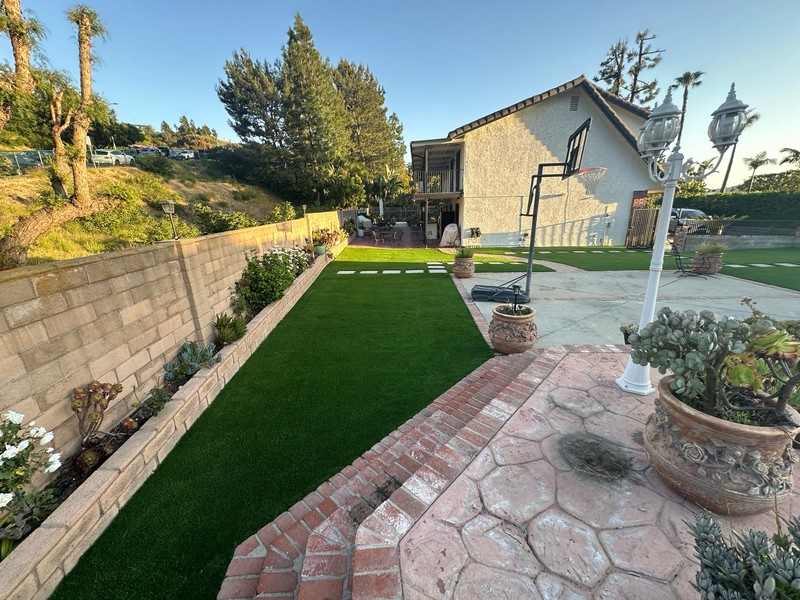
Backyard Drainage Solutions in Los Angeles: Protect Your Patio and Landscaping
Does water collect in your backyard after heavy rain? Standing water can damage landscaping, create muddy areas, and affect patios, walkways, and retaining walls. Fortunately, proper drainage planning can help protect your outdoor space.
Choosing the right backyard drainage solutions in Los Angeles starts with understanding how water moves across your property. Soil conditions, grading, hardscape materials, and nearby structures all affect drainage.
At Green Advisor Inc., we consider drainage when planning backyard remodeling projects, landscape design, paver patios, retaining walls, and outdoor living areas.
In this guide, you’ll learn why backyards flood, which drainage systems may help, and how proper planning can protect your patio and landscaping.
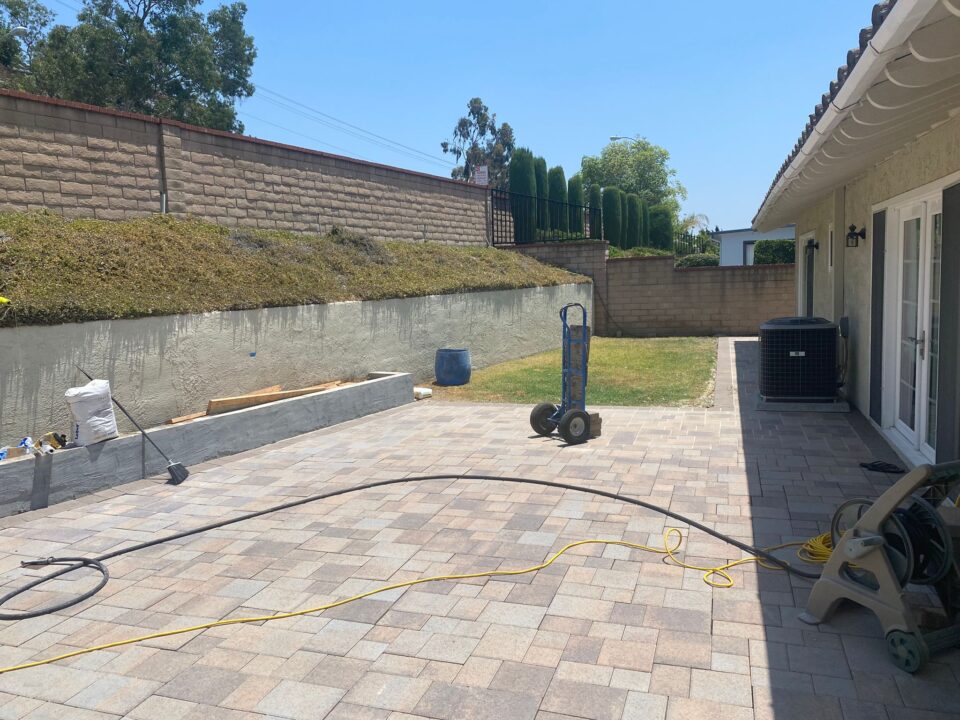
Backyard excavation and site preparation

Backyard excavation and site preparation before landscaping and hardscape installation.
Backyard construction and grading

Preparing the backyard surface for new landscaping, hardscape, and outdoor improvements.
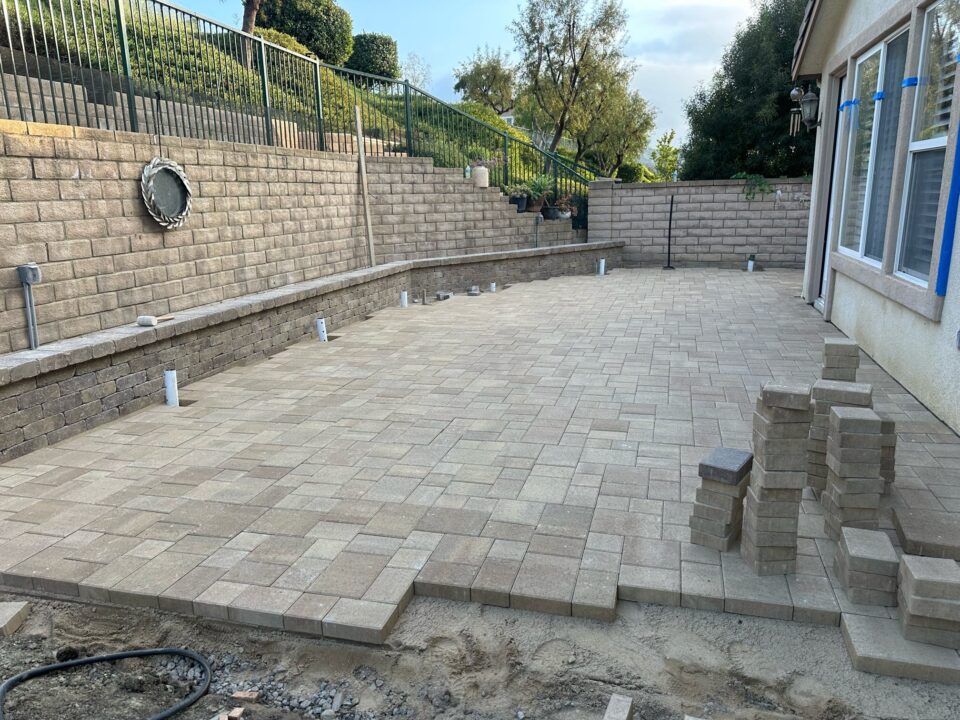
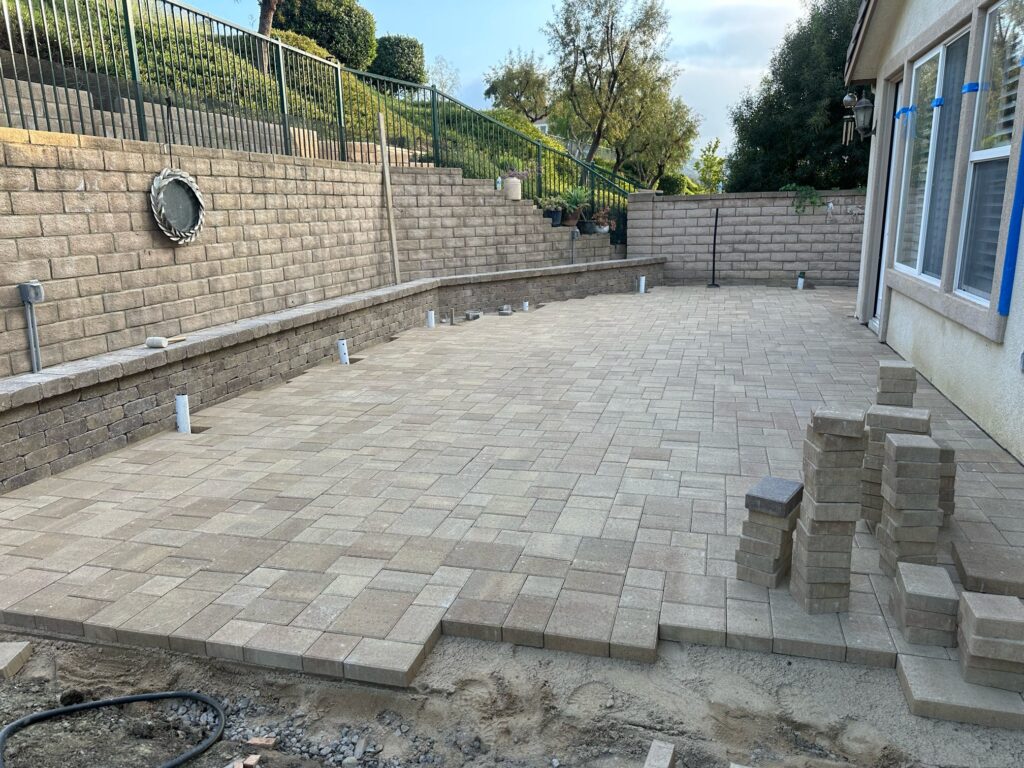
Drainage trench excavation

Trench excavation along a retaining wall during backyard site preparation.
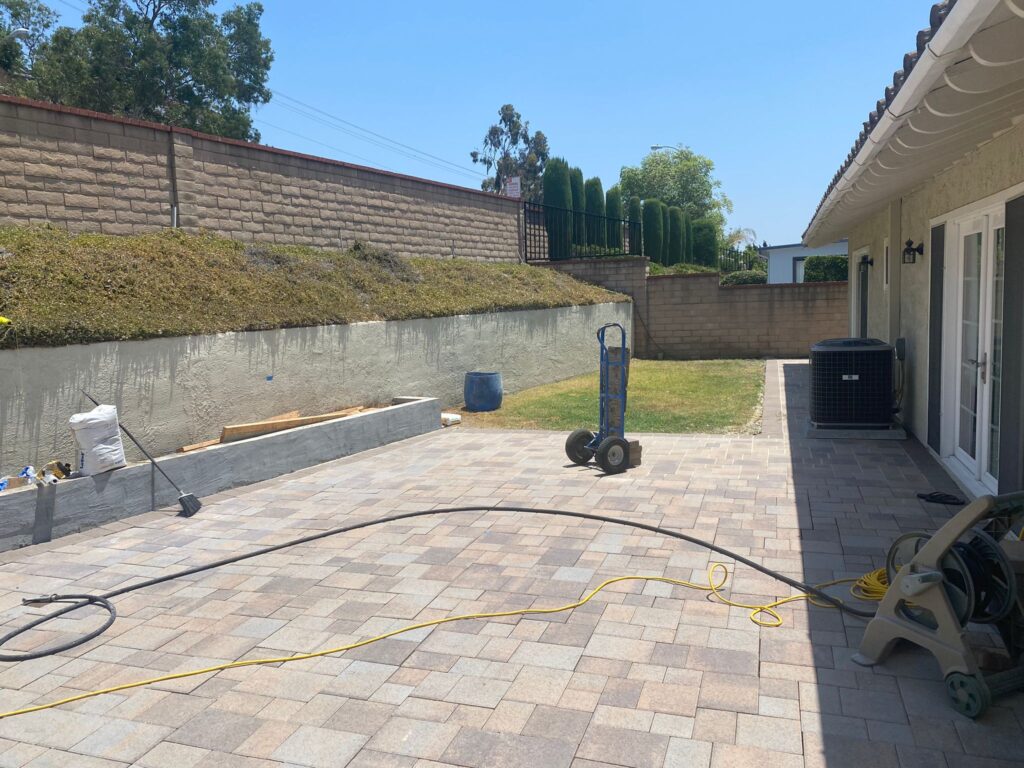
Side yard landscaping and drainage planning

Side yard landscaping and hardscape layout beside a residential home.
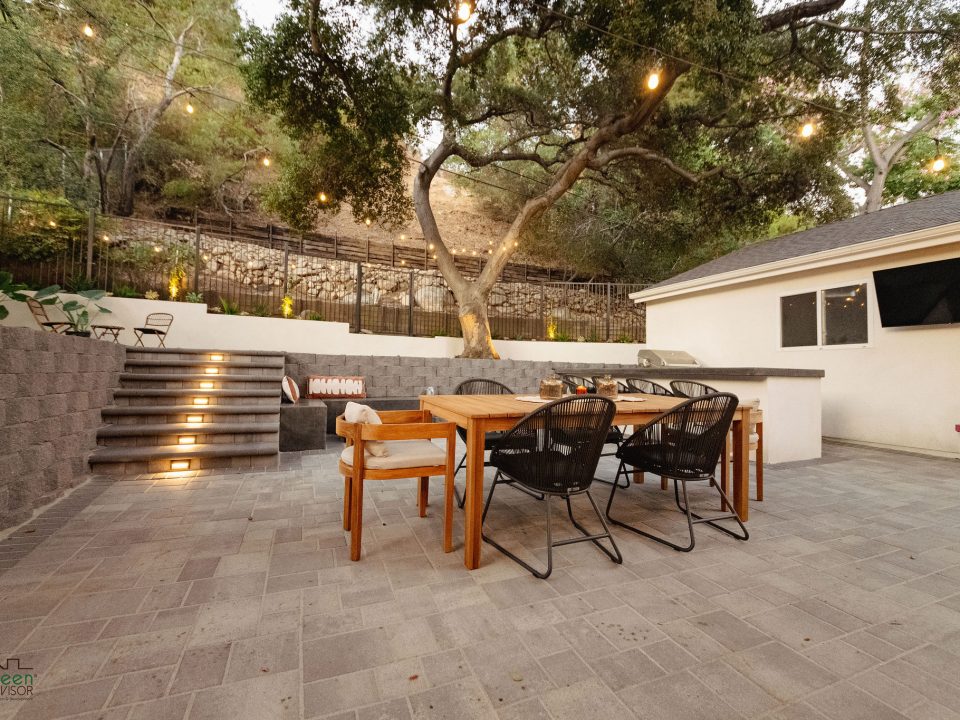
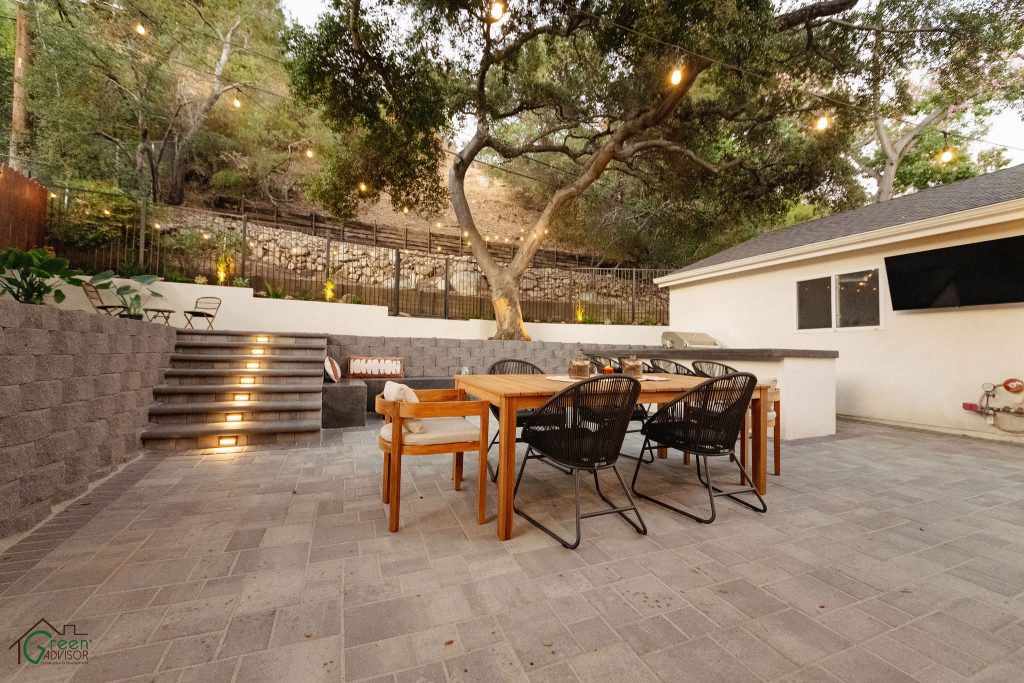
Completed paver patio and retaining wall

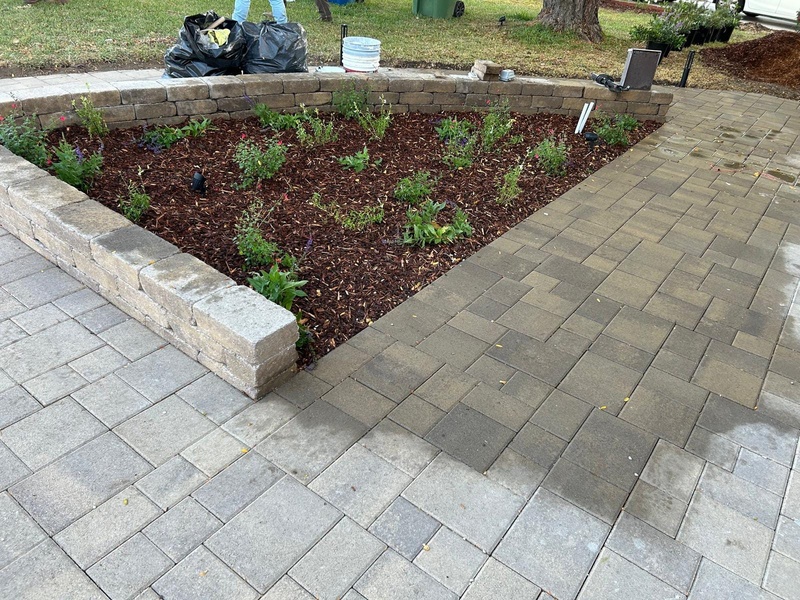
Finished backyard paver patio with retaining wall and landscaping by Green Advisor Inc.
Why Does Water Collect in a Backyard?
Water often collects when the ground cannot absorb rainfall quickly enough or when the property does not have a suitable route for runoff.
Common causes include:
- Low areas where water naturally collects
- Improper grading or surface slopes
- Compacted soil with limited infiltration
- Downspouts discharging near patios or foundations
- Patios and hardscape without adequate drainage
- Blocked or damaged drains
- Runoff from surrounding slopes or neighboring properties
Because every property is different, identifying the source of the water is the first step toward choosing an effective drainage solution.
What Is the Best Backyard Drainage Solution?
The best solution depends on where the water originates, how it moves across the property, and where it can be discharged legally and safely.
Some yards benefit from regrading, while others require surface drains, underground drainage pipes, French drains, or a combination of systems.
For this reason, a professional site evaluation is important before installing new pavers and hardscape or starting a complete backyard remodeling project.
1. Improve Backyard Grading
Grading determines how water moves across the ground. When a backyard slopes toward the house or contains low spots, rainfall may collect in unwanted areas.
Correcting the grade can help redirect surface water toward an appropriate drainage system or approved discharge location.
However, grading must be planned carefully. Moving water away from one area should not create flooding elsewhere or send runoff onto neighboring property.
2. Install a French Drain Where Appropriate
A French drain is typically an underground drainage system that uses a perforated pipe surrounded by drainage aggregate to collect subsurface water.
French drains can be useful where water accumulates in soil or where subsurface drainage needs improvement.
However, they are not the right answer for every drainage problem. Surface flooding, for example, may require a different collection method.
A French drain also needs an appropriate outlet. Without proper discharge planning, collected water may simply accumulate somewhere else.
3. Add Channel Drains Near Patios and Hardscape
Channel drains collect surface water along a narrow opening. They are often considered near patios, paved areas, and other hardscape features where runoff needs to be intercepted.
For example, a channel drain may help manage water where a paved patio meets another surface.
Drain placement, capacity, maintenance access, and the final discharge location should all be considered during design.
4. Use Catch Basins in Low Areas
Catch basins are designed to collect surface runoff at specific locations. They can be useful in areas where water naturally flows toward a low point.
However, the collection point is only part of the system. The connecting pipes and discharge location must also be properly planned.
In addition, catch basins require occasional cleaning to remove leaves, soil, and other debris.
5. Plan Proper Drainage for Paver and Concrete Patios
Both paver patios and concrete patios need proper drainage. Without suitable grading, water can collect on the surface, move toward the home, or affect the surrounding landscape.
For paver patios, drainage planning includes the surface slope, base preparation, soil conditions, and surrounding hardscape. Standard interlocking pavers are not automatically permeable.
Concrete patios also require appropriate slopes and drainage planning. Because conventional concrete is generally impermeable, surface runoff must be directed toward a suitable drainage system or approved discharge location.
Depending on the property, drainage improvements may include channel drains, catch basins, grading adjustments, or other systems.
Not sure which patio material is best? Read our Pavers vs. Concrete Comparison Guide to compare durability, maintenance, design options, and installation considerations.
Green Advisor provides paver and masonry services for patios, walkways, driveways, pool decks, and outdoor living spaces throughout Los Angeles.
6. Protect Retaining Walls From Water Pressure
Retaining walls are common in sloped Los Angeles backyards. However, water collecting behind a wall can increase pressure and contribute to structural problems.
Depending on the wall design, drainage may involve appropriate backfill, drainage aggregate, pipes, outlets, or other engineered details.
Because retaining walls may have structural and permitting requirements, their drainage systems should be designed for the specific site.
7. Improve Drainage Around Pools
Pool decks and surrounding patios need thoughtful drainage to manage rainfall and surface runoff.
The design should help prevent unwanted water accumulation and account for how runoff moves around the pool, surrounding hardscape, and nearby structures.
For homeowners planning custom pool design and construction, drainage should be coordinated with the overall backyard layout from the beginning.
8. Consider Landscape-Based Drainage Solutions
Not every drainage improvement needs to be hidden underground. Depending on the property, landscape features may help manage runoff.
Options may include shallow vegetated swales, appropriate planting areas, and specially designed rain gardens.
However, plant selection, soil infiltration, slopes, and overflow routes matter. A landscape feature should not be treated as a substitute for a properly designed drainage system where significant flooding occurs.
Explore Green Advisor’s landscape design services for coordinated planting and outdoor space planning.
9. Check Gutters and Downspouts
Sometimes, a backyard drainage problem begins on the roof rather than in the yard itself.
When downspouts discharge too close to a structure or onto a patio, they can contribute to standing water and erosion.
Checking gutter condition, downspout locations, and drainage connections is an important part of evaluating the property.
10. Combine Drainage With Complete Backyard Remodeling
A backyard renovation provides an opportunity to evaluate drainage before installing expensive finishes.
For example, grading, drainage pipes, utilities, retaining walls, pavers, artificial turf, and landscaping may need to be coordinated in a specific construction sequence.
Planning these elements together can reduce the need to disturb newly completed hardscape later.
Green Advisor offers 3D design services to help homeowners visualize the overall backyard layout before construction.
Backyard Drainage Solutions: Quick Comparison
| Drainage Solution | Common Application | Important Consideration |
|---|---|---|
| Regrading | Low spots and improper surface slopes | Safe direction of runoff |
| French drain | Subsurface water collection | Soil conditions and outlet |
| Channel drain | Patios and paved areas | Capacity and discharge |
| Catch basin | Surface water in low areas | Cleaning and pipe connections |
| Retaining wall drainage | Water behind retaining walls | Structural design and drainage details |
| Landscape swale | Directing surface runoff | Slope, erosion and overflow |
How Much Do Backyard Drainage Improvements Cost in Los Angeles?
Drainage costs vary depending on the size of the property, soil conditions, excavation requirements, access, pipe lengths, disposal of excavated materials, and the type of drainage system.
A small surface-drain improvement may involve much less work than a drainage project requiring extensive excavation, retaining wall modifications, or reconstruction of existing patios.
Therefore, homeowners should obtain a site-specific evaluation rather than relying on a single price estimate for every property.
See Green Advisor’s Backyard Remodeling Work
Proper planning is essential when combining landscaping, patios, retaining walls, and other outdoor features.
Watch a Green Advisor backyard remodeling project in Sierra Madre, California. The completed work includes pavers, retaining walls, artificial turf, a putting green, a custom BBQ area, fencing, and landscaping.
Although the video does not demonstrate drainage installation, it shows how several outdoor living features can be integrated into one coordinated backyard renovation.
Real Backyard Projects and Material Partners
Green Advisor works on complete outdoor living projects involving pavers, landscaping, retaining walls, pool areas, and patios.
See our Torrance outdoor living remodeling project, featuring pavers, a patio cover, custom BBQ, fire pit, and planter wall.
You can also explore our outdoor living partners, including Angelus Block and Belgard, for information about paver and hardscape materials.
Frequently Asked Questions About Backyard Drainage in Los Angeles
Why does my backyard flood when it rains?
Backyard flooding may result from poor grading, compacted soil, low areas, blocked drains, downspout discharge, or runoff from nearby slopes. The cause should be identified before choosing a drainage solution.
Are French drains good for backyard flooding?
French drains can help collect subsurface water, but they are not appropriate for every flooding problem. Surface runoff may require catch basins, channel drains, grading, or another system.
How do you prevent water from collecting on a patio?
Proper surface slopes, drainage channels, catch basins, and suitable discharge connections may help prevent standing water. The correct approach depends on the patio and surrounding property.
Do paver patios need drainage?
Yes. Paver patios should be planned with suitable drainage and base preparation. Standard interlocking pavers are not necessarily permeable, so water management depends on the complete installation system.
Can drainage problems damage retaining walls?
Yes. Water buildup behind a retaining wall can increase pressure and contribute to damage. Proper drainage and structural design are important for retaining wall performance.
Do I need a permit for backyard drainage work in Los Angeles?
Permit requirements depend on the project scope, location, discharge method, and local jurisdiction. Some grading, drainage, retaining wall, and related construction projects may require approvals.
Should drainage be installed before backyard remodeling?
Drainage should be evaluated during the planning stage. When drainage improvements are necessary, they should be coordinated with grading, utilities, patios, retaining walls, landscaping, and other construction work.
Plan Your Backyard Remodeling Project With Proper Drainage
A beautiful backyard needs more than attractive materials. Proper grading, drainage, and thoughtful construction planning help protect patios, landscaping, pools, and other outdoor features.
Whether you’re planning a new paver patio, concrete walkway, retaining wall, or complete backyard renovation, drainage should be evaluated before construction begins.
Green Advisor Inc. provides backyard remodeling in Los Angeles, including landscape design, pavers, hardscape, pools, and outdoor living construction.
Explore our trusted outdoor living partners and discover more completed projects in our project gallery.
Ready to improve your backyard? Contact Green Advisor Inc. to discuss your property, design goals, and remodeling plans.