Retaining Walls Los Angeles: Cost, Types, Permits & Drainage
August 17, 2026
Best Pavers for Los Angeles Backyards: Materials, Cost, Design & Installation
August 31, 2026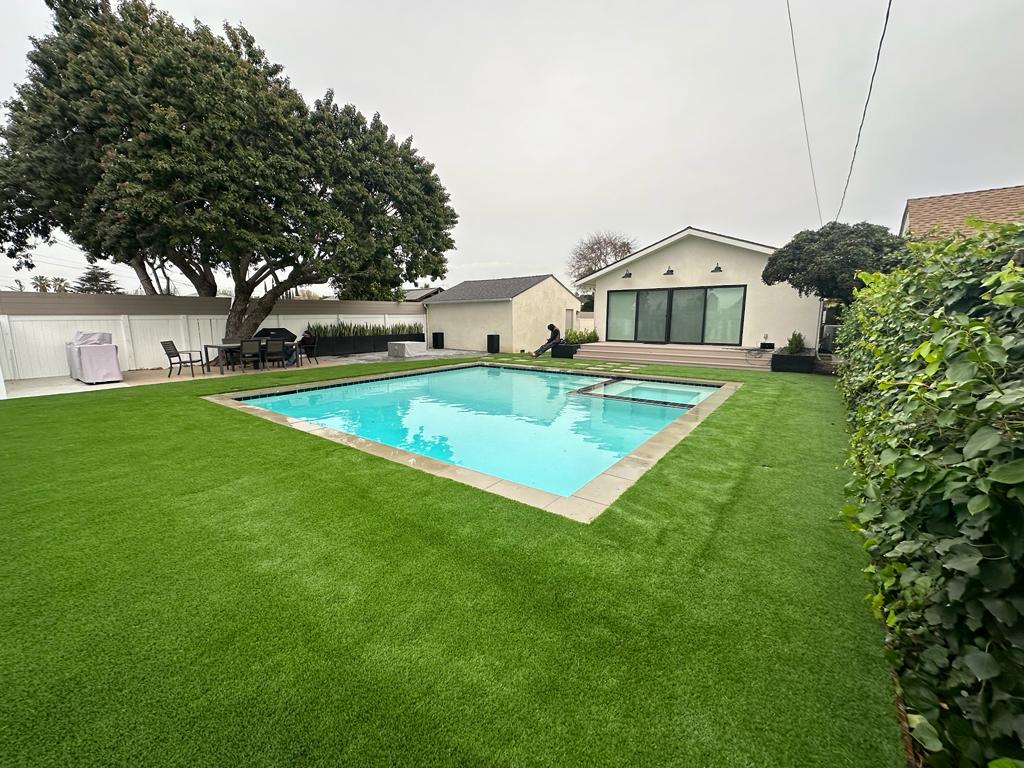
Artificial Grass and Turf Installation Services in Los Angeles: Complete 2026 Guide
A green and attractive lawn can completely change the appearance of a backyard. However, maintaining natural grass in Southern California can require regular watering, mowing, fertilizing, and ongoing care.
For many homeowners, artificial grass installation in Los Angeles offers another way to create a clean and usable outdoor space with less routine lawn maintenance.
Modern artificial turf can be used for backyards, front yards, pool areas, play spaces, pet areas, side yards, putting greens, and complete outdoor living projects.
However, choosing the right turf is only part of the project. Proper excavation, base preparation, drainage, seams, edges, infill, and installation are also important for long-term performance.
In this guide, Green Advisor Inc. explains what homeowners should know before installing artificial grass or synthetic turf in Los Angeles.

What Is Artificial Grass?
Artificial grass, also called synthetic grass or artificial turf, is a manufactured landscaping surface designed to provide the appearance of natural grass without requiring regular mowing or traditional lawn irrigation.
Today’s turf products are available in different blade shapes, colors, textures, pile heights, densities, and drainage systems.
This means homeowners can select turf based on how an outdoor area will actually be used.
For example, the best turf for a decorative front lawn may be different from the turf selected for pets, children, a pool area, or a high-traffic backyard.

Why Are Los Angeles Homeowners Choosing Artificial Turf?
Artificial grass has become a popular landscaping option for Los Angeles properties because it can create a consistent lawn appearance while reducing many of the maintenance tasks associated with natural grass.
Common reasons homeowners consider artificial turf include:
- Less routine lawn maintenance
- No mowing
- Reduced lawn irrigation
- No traditional lawn fertilizing
- Consistent appearance throughout the year
- Useful surfaces for pets and children
- Clean transitions between patios and landscape areas
- Flexible installation in small or difficult lawn areas
Artificial turf can also be incorporated into a larger landscape design instead of covering the entire yard.
Combining turf with plants, trees, pavers, stone, lighting, and outdoor living areas can create a more balanced landscape.
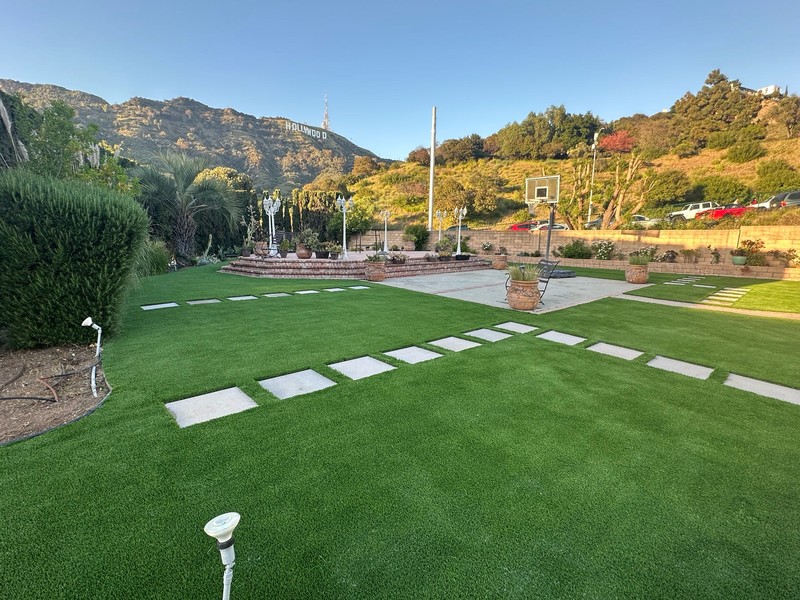
Modern outdoor living space created by Green Advisor Inc.
Where Can Artificial Grass Be Installed?
Artificial turf is highly flexible and can be used in many areas around a residential property.
Popular applications include:
- Backyards
- Front yards
- Side yards
- Pool surroundings
- Children’s play areas
- Pet areas
- Putting greens
- Walkway borders
- Patio accents
- Outdoor entertainment spaces
- Commercial landscaping
The type of turf and installation method should match the intended use of the space.
Artificial Grass for Backyard Remodeling
Artificial grass can work especially well as part of a complete backyard remodeling project in Los Angeles.
Instead of treating the lawn as a separate feature, the turf can be designed around the pool, patio, outdoor kitchen, walkways, garden areas, and entertainment spaces.
For example, artificial turf can soften a large area of hardscape while creating visual separation between different parts of the yard.
It can also be installed between pavers or around patios to create a more modern landscape design.
Artificial Grass Between Pavers
One popular Los Angeles backyard design combines artificial turf with concrete or porcelain pavers.
Narrow strips of synthetic grass between large-format pavers can create a clean contemporary appearance.
This design is often used for:
- Patios
- Walkways
- Pool decks
- Side yards
- Courtyards
- Outdoor dining areas
Green Advisor Inc. can coordinate artificial grass with professional paver and masonry installation so the materials, spacing, elevation, and overall layout work together.
Can Artificial Turf Be Installed Around a Pool?
Yes. Artificial turf can be incorporated into many pool landscape designs.
It can help soften the appearance of large hardscape areas and provide a visual transition between pool decking and the rest of the backyard.
However, pool-area turf should be selected and installed with drainage, foot traffic, surface temperature, and surrounding materials in mind.
If you are building a new swimming pool, it is usually better to coordinate the turf during the overall pool design and construction process.
This allows the pool, deck, drainage, landscape, and artificial grass to be planned together.
Is Artificial Grass Good for Dogs and Pets?
Artificial grass can be a practical option for homes with dogs when the turf system is selected specifically for pet use.
Pet-friendly turf areas should focus on drainage and easy cleaning.
A properly prepared base can help liquids move through the turf rather than remaining on the surface.
Homeowners should also discuss appropriate turf, infill, drainage, and cleaning requirements with their installer before choosing a product for a pet area.
Is Artificial Turf Good for Children?
Artificial grass can also create a defined play area for children.
For play spaces, turf selection should take into account softness, durability, traffic levels, drainage, and the type of activity expected in the area.
The entire play environment should be considered, including surrounding hardscape, steps, walls, furniture, pool access, and other landscape features.
Does Artificial Grass Need Drainage?
Yes. Drainage is one of the most important parts of artificial turf installation.
Water still reaches the yard from rain, cleaning, pools, landscaping, and surrounding surfaces.
Therefore, it needs a planned path away from the turf and nearby structures.
The proper drainage solution depends on several factors, including:
- Existing soil conditions
- Property slope
- Existing drainage
- Size of the turf area
- Nearby patios and pools
- Pet use
- Water flow from surrounding areas
Drainage should be considered before the artificial grass is installed rather than corrected after the project is complete.
Why Is the Base Under Artificial Turf Important?
The visible turf is only the top layer of a complete artificial grass installation.
The preparation underneath it can have a major effect on the final appearance and performance.
Depending on the property, installation may involve removing existing grass or soil, preparing the area, installing and compacting base material, establishing proper grades, and addressing drainage.
A properly prepared surface helps create a stable foundation for the finished turf.
How Is Artificial Grass Installed?
The exact process depends on the property and type of turf. However, a professional artificial grass installation generally includes several important stages.
1. Site Evaluation
First, the installation area is measured and inspected.
The contractor can review access, existing landscaping, drainage, slopes, soil conditions, nearby hardscape, irrigation, and how the area will be used.
2. Removal of Existing Material
Existing grass, soil, weeds, or other material may need to be removed to create room for the new turf system.
3. Grading and Drainage Preparation
Next, the area is prepared to create the correct elevation and water flow.
Existing drainage conditions should also be addressed at this stage.
4. Base Installation
A suitable base material is placed and compacted to create a stable surface underneath the turf.
5. Turf Layout and Cutting
The artificial grass is positioned and carefully cut around landscape borders, walls, patios, pavers, trees, and other features.
6. Seaming and Securing
Multiple sections may need to be joined together depending on the size and shape of the installation area.
Proper positioning helps make seams less noticeable and keeps the turf secure.
7. Infill and Final Grooming
Depending on the turf system, appropriate infill may be applied.
The grass is then groomed and the completed area is reviewed.
How Much Does Artificial Grass Installation Cost in Los Angeles?
The cost of artificial turf installation in Los Angeles can vary significantly from one project to another.
Rather than relying only on a square-foot price, homeowners should consider the complete scope of work.
Important cost factors include:
- Total square footage
- Type and quality of turf
- Existing lawn removal
- Excavation
- Site access
- Base preparation
- Drainage work
- Property slope
- Number of seams and cuts
- Curved landscape borders
- Paver integration
- Pet-specific requirements
- Infill selection
- Disposal and cleanup
A simple rectangular lawn can require less detailed cutting than an irregular backyard with planting beds, pavers, trees, pool decking, and curved borders.
For this reason, an on-site evaluation provides a more useful estimate than a general online price.
What Type of Artificial Turf Should You Choose?
There is no single turf product that is ideal for every project.
The right choice depends on where it will be installed and how the area will be used.
Consider the following factors:
- Appearance
- Blade height
- Color variation
- Density
- Softness
- Expected foot traffic
- Drainage
- Pet use
- Children’s activities
- Surrounding landscape design
Seeing actual turf samples can also help you compare texture and appearance before making a final decision.
Does Artificial Grass Get Hot in Los Angeles?
Artificial turf can become warm in direct sunlight, especially during hot weather.
The exact surface temperature depends on the turf product, infill, exposure, surrounding materials, airflow, and other site conditions.
This is especially important when planning turf around pools, children’s areas, or locations where people may walk barefoot.
Shade from trees, patio structures, umbrellas, or other landscape elements can help create more comfortable outdoor areas.
A complete backyard design can also balance artificial turf with planting areas, pavers, and shaded seating instead of using one material throughout the entire property.
Does Artificial Grass Require Maintenance?
Artificial grass requires less traditional lawn maintenance, but it is not completely maintenance-free.
Homeowners may still need to:
- Remove leaves and debris
- Rinse certain areas when necessary
- Clean pet areas
- Brush high-traffic sections
- Remove weeds that occasionally appear around edges
- Inspect seams and borders
The amount of care depends on the location and how heavily the space is used.
How Long Does Artificial Grass Last?
The lifespan of artificial turf depends on the product, installation quality, amount of sunlight, traffic, maintenance, pet use, and other site conditions.
Higher-traffic spaces generally experience more wear than decorative landscape areas.
Instead of selecting turf based only on appearance, homeowners should consider the expected use of the area and review available manufacturer specifications and warranty information.
Artificial Grass vs. Natural Grass
Both natural and artificial grass can work well in residential landscape design, but they provide different benefits.
Natural grass offers a living landscape surface but requires watering, mowing, feeding, and ongoing lawn care.
Artificial grass removes many of those routine lawn tasks and maintains a more consistent visual appearance.
However, synthetic turf does not provide the same environmental functions as living plants and natural lawn.
For many projects, a balanced landscape that combines artificial turf with trees, shrubs, drought-conscious plants, and permeable areas can create a more complete outdoor environment.
Can Artificial Turf Be Part of a Low-Maintenance Backyard?
Yes. Artificial turf can be one element of a low-maintenance backyard design.
It can be combined with:
- Pavers
- Native or drought-conscious plants
- Drip irrigation
- Decorative gravel
- Outdoor lighting
- Patio covers
- Outdoor kitchens
- Pool areas
This approach provides different textures and functional areas without depending entirely on a traditional lawn.
Artificial Turf and Outdoor Kitchens
Artificial grass can also help visually connect an outdoor cooking area with the surrounding landscape.
For example, an outdoor kitchen can sit on a durable paved patio while turf and planting areas soften the surrounding space.
Planning these surfaces together creates better transitions between cooking, dining, recreation, and landscape areas.
Artificial Grass for Small Los Angeles Backyards
Artificial turf can be especially useful in smaller yards where every part of the property needs a clear purpose.
A compact turf area may create space for children or pets without taking over the entire backyard.
It can also be combined with a small patio, seating area, planters, and pavers to create several functional zones within a limited area.
Should You Install Artificial Grass Before or After Pavers?
When a project includes both hardscape and artificial turf, the two surfaces should be planned together from the beginning.
The finished elevation of the pavers affects the turf base and final grass height.
Drainage also needs to work across the complete area.
For larger backyard renovations, completing major construction and hardscape preparation before the final turf installation can help protect the new artificial grass from unnecessary construction traffic.
Can Artificial Grass Be Used in a Complete Outdoor Living Design?
Absolutely.
Artificial turf does not have to be the main feature of the backyard.
It can instead act as one part of a complete outdoor environment that includes:
- Custom pools
- Pavers and masonry
- Outdoor kitchens
- Landscape design
- Patio and entertainment areas
- Outdoor lighting
- Planting areas
- Walkways
Designing these elements together can create better traffic flow and a more visually connected backyard.
Professional Artificial Grass Installation in Los Angeles
Professional installation involves much more than rolling synthetic grass over an existing yard.
Site preparation, base construction, drainage, grading, cutting, seams, edging, infill, and final finishing all contribute to the completed project.
Green Advisor Inc. provides artificial grass and turf installation in Los Angeles for residential and commercial properties.
Artificial turf can be installed as a standalone landscape improvement or incorporated into a complete backyard transformation.
Our team can coordinate turf with pools, pavers, landscaping, outdoor kitchens, patios, and other outdoor living features.
Why Choose Green Advisor Inc. for Artificial Turf Installation?
A successful artificial turf project should complement both the property and the way the outdoor space will be used.
Green Advisor Inc. approaches artificial grass as part of the overall landscape rather than simply as a replacement surface.
Depending on your project, our team can help coordinate:
- Artificial turf installation
- Landscape layout
- Site preparation
- Drainage considerations
- Pavers and hardscape
- Pool areas
- Outdoor kitchens
- Patios
- Complete backyard remodeling
This makes it easier to create an outdoor space where the different materials and features work together.
Ready to Install Artificial Grass in Los Angeles?
If you are considering artificial grass for your backyard, front yard, pool area, pet space, or complete outdoor renovation, start with a professional site evaluation.
Green Advisor Inc. provides artificial grass installation and complete outdoor remodeling services throughout Los Angeles and surrounding communities.
Explore our service areas or contact Green Advisor Inc. to discuss your artificial turf project.
Frequently Asked Questions About Artificial Grass Installation
Is artificial grass good for Los Angeles homes?
Artificial grass can be a good option for Los Angeles homeowners who want a consistent lawn appearance with less traditional lawn maintenance. The right solution depends on the property, intended use, sun exposure, drainage, and overall landscape design.
How much does artificial grass installation cost in Los Angeles?
The cost depends on turf quality, square footage, excavation, base preparation, drainage, access, site shape, infill, edging, and other project requirements. A site-specific estimate is the best way to determine the cost of an individual installation.
Does artificial turf need drainage?
Yes. Proper drainage is an important part of artificial turf installation. The installation should consider existing soil, slope, surrounding hardscape, rainfall, irrigation, pools, and how the area will be used.
Is artificial grass suitable for dogs?
Artificial turf can be used for dogs when the turf, base, drainage, and infill are selected with pet use in mind. Pet areas also require routine cleaning.
Can artificial grass be installed around a swimming pool?
Yes. Artificial grass can be incorporated into pool landscaping and used to create transitions between pool decking, patios, and planted areas. Drainage, heat, traffic, and the surrounding materials should be considered during design.
Does artificial grass get hot?
Artificial grass can become warm when exposed to direct sunlight. The turf product, infill, surrounding materials, shade, airflow, and weather conditions can all affect surface temperature.
Does artificial turf require maintenance?
Yes, although it requires less traditional lawn care. Artificial turf may need debris removal, occasional rinsing, brushing, pet-area cleaning, and periodic inspection of edges and seams.
Can artificial grass be installed between pavers?
Yes. Artificial turf strips between pavers are commonly used to create modern patios, walkways, pool areas, and outdoor living spaces. Proper spacing, base preparation, drainage, and finished elevations are important.
Can artificial grass be included in a full backyard remodel?
Yes. Artificial grass can be coordinated with pools, pavers, outdoor kitchens, landscaping, patios, lighting, and other features as part of a complete backyard remodeling project.