
10 Backyard Remodeling Mistakes Homeowners Should Avoid
July 20, 2026
How to Plan a Backyard Remodel in Los Angeles: 2026 Guide
August 10, 2026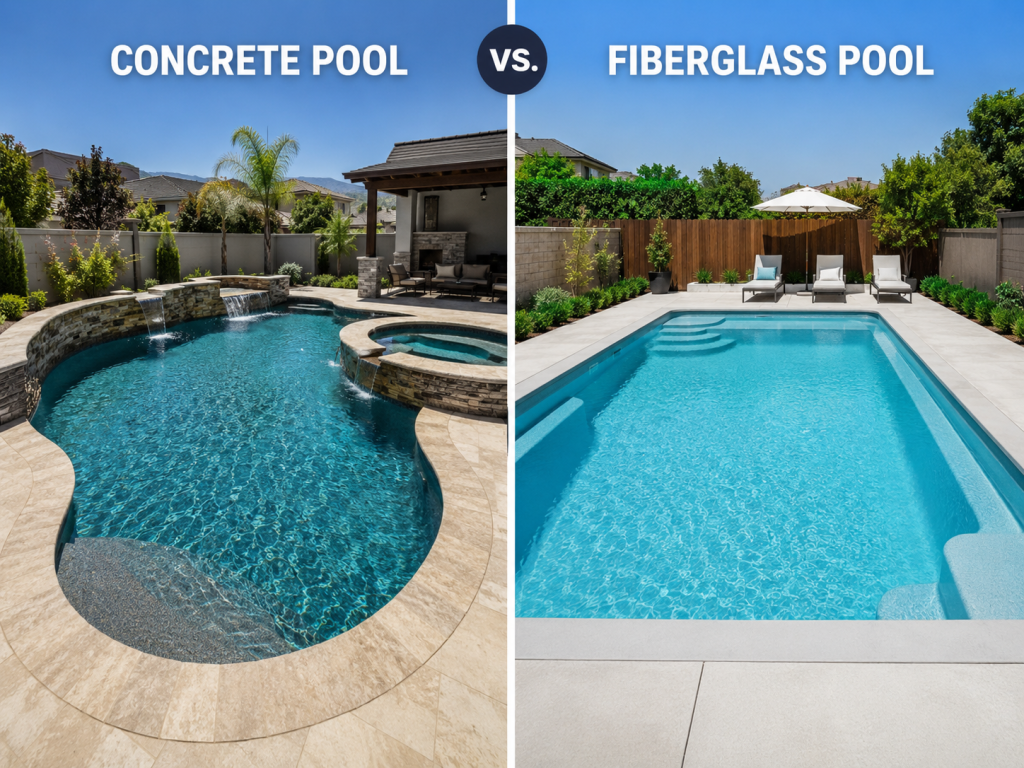
Choosing the Best Pool for You: Concrete vs. Fiberglass Pools Compared
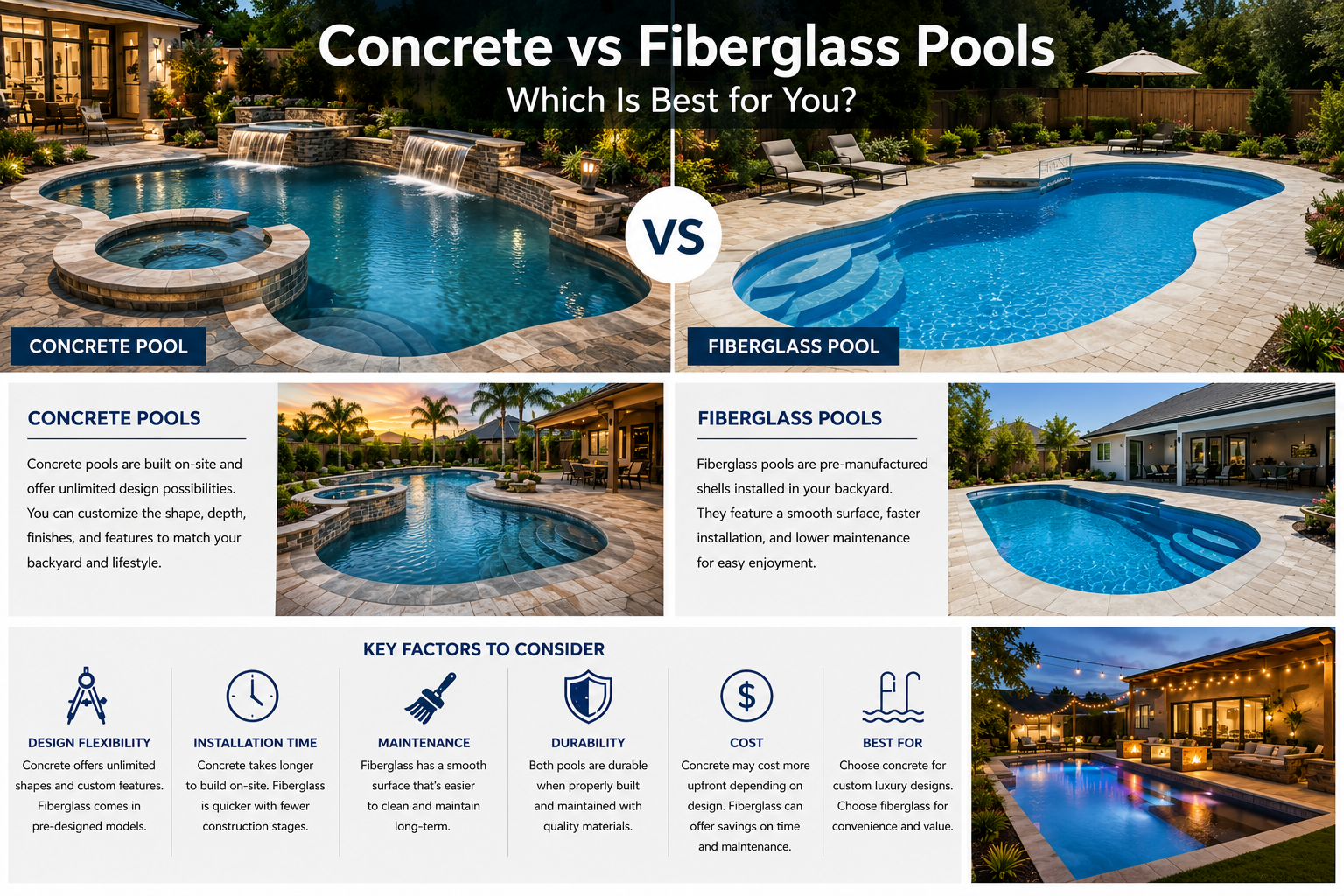
Choosing between concrete vs. fiberglass pools is one of the first major decisions in a new pool project. Both options can create a beautiful and long-lasting backyard. However, they differ in design freedom, installation, surface feel, care needs, and long-term ownership.
A concrete pool may be ideal when you want a custom shape, unique depth, raised spa, or detailed resort-style design. A fiberglass pool may be a better match when you prefer a smooth surface, a set pool model, and a more direct installation process.
There is no single pool type that works for every homeowner. The right choice depends on your property, budget, design goals, timeline, and plans for the surrounding yard.
This guide compares the main features of concrete and fiberglass pools. It will help you understand the benefits and limits of each option before starting your Los Angeles pool design and construction project.
Concrete vs. Fiberglass Pools: Quick Comparison
| Feature | Concrete Pool | Fiberglass Pool |
|---|---|---|
| Design | Built in a custom shape and size | Selected from available factory-made models |
| Installation | Built on-site through several construction stages | Manufactured off-site and delivered as one shell |
| Surface | Plaster, aggregate, tile, or other selected finish | Smooth factory-applied gelcoat surface |
| Maintenance | May need more brushing and surface care | Smooth surface is often easier to clean |
| Size options | Can be designed around the property | Limited by available models and delivery access |
| Custom features | Extensive options for steps, depths, spas, and edges | Features are based on the selected shell model |
| Best for | Custom yards and detailed pool designs | Homeowners who like an available shell design |
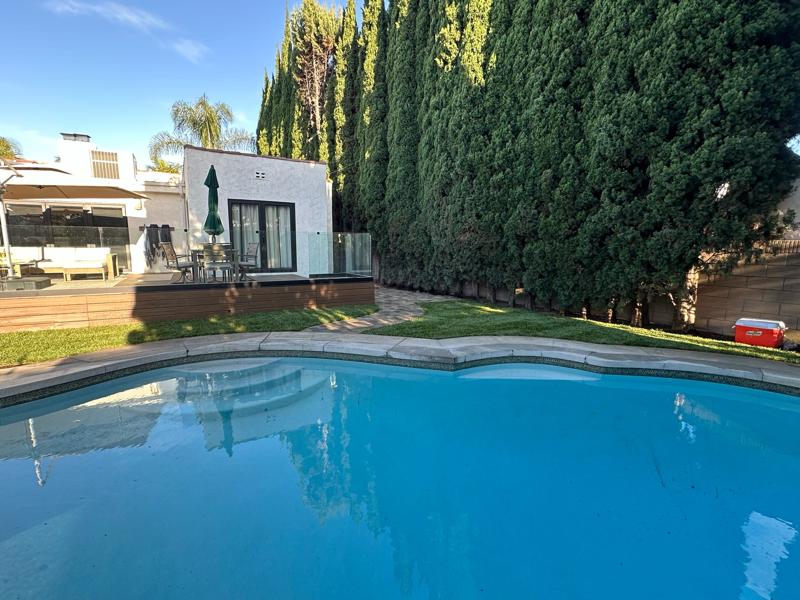
What Is a Concrete Pool?
A concrete pool is built at the property rather than delivered as a finished shell. The construction team excavates the pool area and installs plumbing and structural steel. Concrete is then applied to form the pool shell.
After the shell is complete, the pool receives tile, coping, an interior finish, and the selected equipment. The surrounding area can also include pavers, landscaping, lighting, seating, and shade.
Because the pool is formed on-site, the design can respond to the shape of the yard. This makes concrete a popular choice for custom homes, narrow properties, hillside lots, and complete outdoor living projects.
Learn more about our concrete pool construction in Los Angeles.
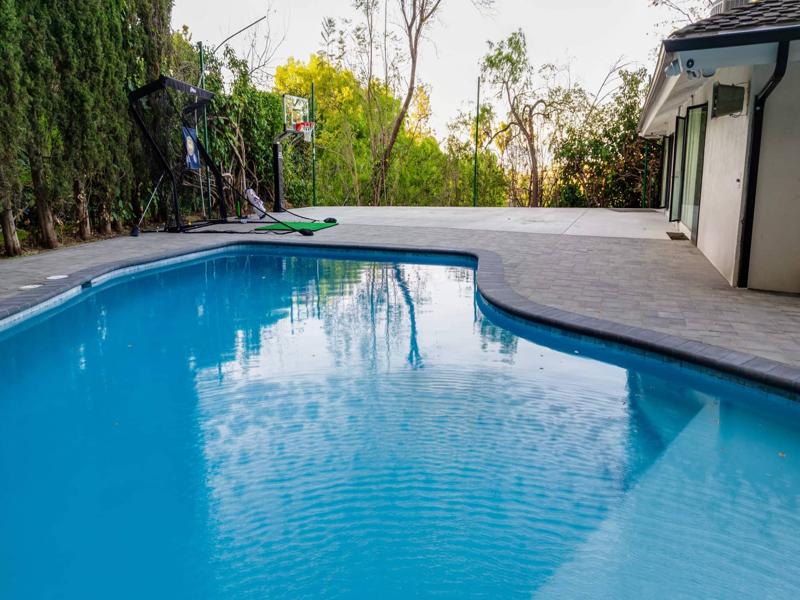
What Is a Fiberglass Pool?
A fiberglass pool is made inManufacturers build fiberglass pools in factories before delivering them to your property. a factory as a complete shell. Homeowners choose from the shapes, sizes, depths, steps, and seating areas offered by the manufacturer.
The finished shell is transported to the property and placed into a prepared excavation. The installer then connects the pool systems and completes the backfill, coping, deck, and surrounding yard.
Fiberglass pools have a smooth and nonporous interior surface. This can make regular cleaning easier because dirt and algae have fewer rough areas to hold onto.
Explore our fiberglass pool installation services in Los Angeles.
1. Pool Design and Customization
Design freedom is one of the biggest differences between concrete and fiberglass pools.
Concrete Pool Design
A concrete pool can be shaped around the property and the homeowner’s goals. You can choose the length, width, depth, steps, benches, curves, corners, and water features.
Concrete may be the better choice when the design includes:
- A custom geometric or freeform shape
- A long lap-swimming area
- A deep swimming or activity zone
- An attached or raised spa
- A Baja shelf or tanning ledge
- An infinity or vanishing edge
- Custom benches and entry steps
- Raised walls and decorative spillways
- Fire and water features
- A pool designed around a narrow or unusual yard
Fiberglass Pool Design
Fiberglass pools come in preset models. Many modern shells already include popular features such as steps, benches, ledges, and shallow lounging areas.
The selection can still be broad. However, the basic pool shape cannot be changed after the shell is made. You must choose a model that works with your yard, access, and preferred layout.
Best choice for design freedom: Concrete.
2. Installation Process
The installation process is also very different.
Concrete Pool Installation
A concrete pool is built in stages. Work may include design, engineering, permits, excavation, steel, plumbing, electrical systems, concrete application, curing, tile, coping, decking, interior finishing, inspections, and startup.
The schedule depends on the design and site. Permit reviews, inspections, weather, material choices, and added backyard work can also affect the timeline.
Fiberglass Pool Installation
A fiberglass pool arrives at the property as a completed shell. This removes several on-site construction stages. After excavation, the shell is placed, leveled, connected, backfilled, and secured within the new pool area.
The full project still requires planning and site preparation. Decking, utilities, access, drainage, landscaping, and inspections must also be addressed.
Best choice for a simpler installation process: Fiberglass.
3. Property Access and Pool Delivery
Property access can play a major role in the decision.
A fiberglass shell must travel from the factory to the home. It must also pass through or over the property to reach the excavation. Large shells may require wide access and lifting equipment.
This can be difficult on properties with narrow side yards, mature trees, overhead lines, walls, steep slopes, or nearby structures.
A concrete pool is formed inside the excavated area. Therefore, the project does not require delivery of a full-size pool shell. Equipment and materials still need access, but the process may work better for some restricted properties.
A professional site review can determine whether a fiberglass shell can reach the planned pool location safely.
4. Pool Surface and Comfort
The pool surface affects comfort, appearance, and cleaning.
Concrete Pool Surfaces
Concrete pools offer many finish choices. These may include traditional plaster, colored plaster, exposed aggregate, polished finishes, glass tile, and decorative waterline tile.
The texture depends on the selected product. Some finishes feel smoother than others. Finish quality, installation, chemistry, and care can also affect how the surface ages.
Fiberglass Pool Surfaces
Fiberglass shells usually have a smooth gelcoat surface. Many swimmers find this surface comfortable under their feet. The smooth finish can also be gentler around steps, benches, and shallow areas.
Best choice for a smooth factory-made surface: Fiberglass.
5. Cleaning and Maintenance
Every swimming pool needs regular care. This includes water testing, cleaning, equipment checks, and proper chemical balance.
Concrete is naturally more porous than a fiberglass gelcoat surface. As a result, concrete pool interiors may need more brushing and surface attention. Water chemistry must also be managed based on the selected finish.
Fiberglass has a smoother, less porous surface. Algae and dirt may have fewer places to attach. This can make routine cleaning more direct, although the water and equipment still need normal care.
Maintenance also depends on nearby trees, wind, shade, pool use, filtration, equipment, and the owner’s care routine.
Best choice for easier routine surface care: Fiberglass.
6. Repairs and Long-Term Surface Care
Both pool types may need repairs during their lifetime. However, the types of repairs can differ.
A concrete pool finish may wear, stain, crack, or become rough over time. Depending on its condition, the pool may eventually need surface repair or refinishing. Tile, coping, plumbing, and equipment may also need service.
A fiberglass shell can experience gelcoat wear, surface fading, or local damage. Repairs may require matching the existing color and finish. The quality of the original shell and installation can affect long-term performance.
Before choosing a pool, ask the contractor about warranties, surface care, repair options, and the expected maintenance plan.
7. Pool Size and Depth
Concrete gives the designer greater control over pool dimensions. It can support custom depths, long swimming lanes, large entertainment pools, compact plunge pools, and designs with several activity zones.
Fiberglass pools are limited to the manufacturer’s catalog. Shell dimensions are also affected by transport and delivery needs.
However, many homeowners do not need a fully custom size. A standard fiberglass model may already offer enough room for swimming, relaxing, and family use.
Best choice for custom size and depth: Concrete.
8. Integrated Spas and Water Features
Both pool types can include attractive features, but concrete provides more freedom in how they are arranged.
A custom concrete design can include an attached spa, raised spa, spillway, Baja shelf, waterfall, infinity edge, raised wall, fountain, or fire feature. These elements can be formed as part of one coordinated design.
Some fiberglass models include built-in spas, ledges, seating, and other molded features. A separate spa may also be added next to the shell. However, the finished layout must work with the selected model.
Best choice for complex integrated features: Concrete.
9. Pool Decking and Backyard Design
The pool is only one part of the outdoor environment. The deck, landscaping, shade, lighting, seating, and pathways also shape the final result.
Both concrete and fiberglass pools can be combined with:
- Pavers and masonry
- Landscape design
- Outdoor kitchens
- Patio covers and shade structures
- Artificial turf
- Outdoor lighting
- Fire pits and seating areas
- Retaining walls and raised planters
Planning these features at the same time as the pool can improve drainage, movement, material selection, and visual balance.
Green Advisor Inc. can combine the pool with a complete backyard remodeling project in Los Angeles.
10. Initial and Long-Term Cost
Pool cost depends on much more than the shell or structural material. The final budget may include design, engineering, permits, excavation, access, soil conditions, plumbing, electrical work, equipment, tile, coping, decking, landscaping, safety features, and added outdoor spaces.
Concrete pools often involve more on-site labor and a longer building process. Custom shapes and detailed finishes can also add to the project scope.
Fiberglass pools may reduce some construction stages. However, shell size, delivery, crane access, excavation, backfill, decking, and equipment still affect the total cost.
It is best to compare complete proposals rather than a basic shell price. Ask each contractor to explain what is included and what may create an added charge.
11. Durability and Pool Lifespan
Both concrete and fiberglass pools can provide many years of use when they are well designed, installed, and maintained.
Concrete has a long history in custom pool construction. It creates a strong shell and allows repairs or finish changes as the pool ages.
A quality fiberglass shell can also provide long-term performance. Its success depends on shell construction, site preparation, drainage, backfill, plumbing, installation, and ongoing care.
Instead of choosing by a lifespan claim alone, consider the complete system. The contractor, engineering, installation quality, equipment, drainage, and maintenance plan all matter.
12. Permits and Pool Safety in Los Angeles
New pool projects may require plans, permits, inspections, and safety measures. Rules can vary by city and property.
Local requirements may address setbacks, structural plans, electrical systems, plumbing, drainage, barriers, gates, alarms, and other safety features. Hillside properties and unusual soil conditions may require added review.
Homeowners can review current information through the Los Angeles Department of Building and Safety. Your pool contractor should also confirm the rules that apply to your address and project.
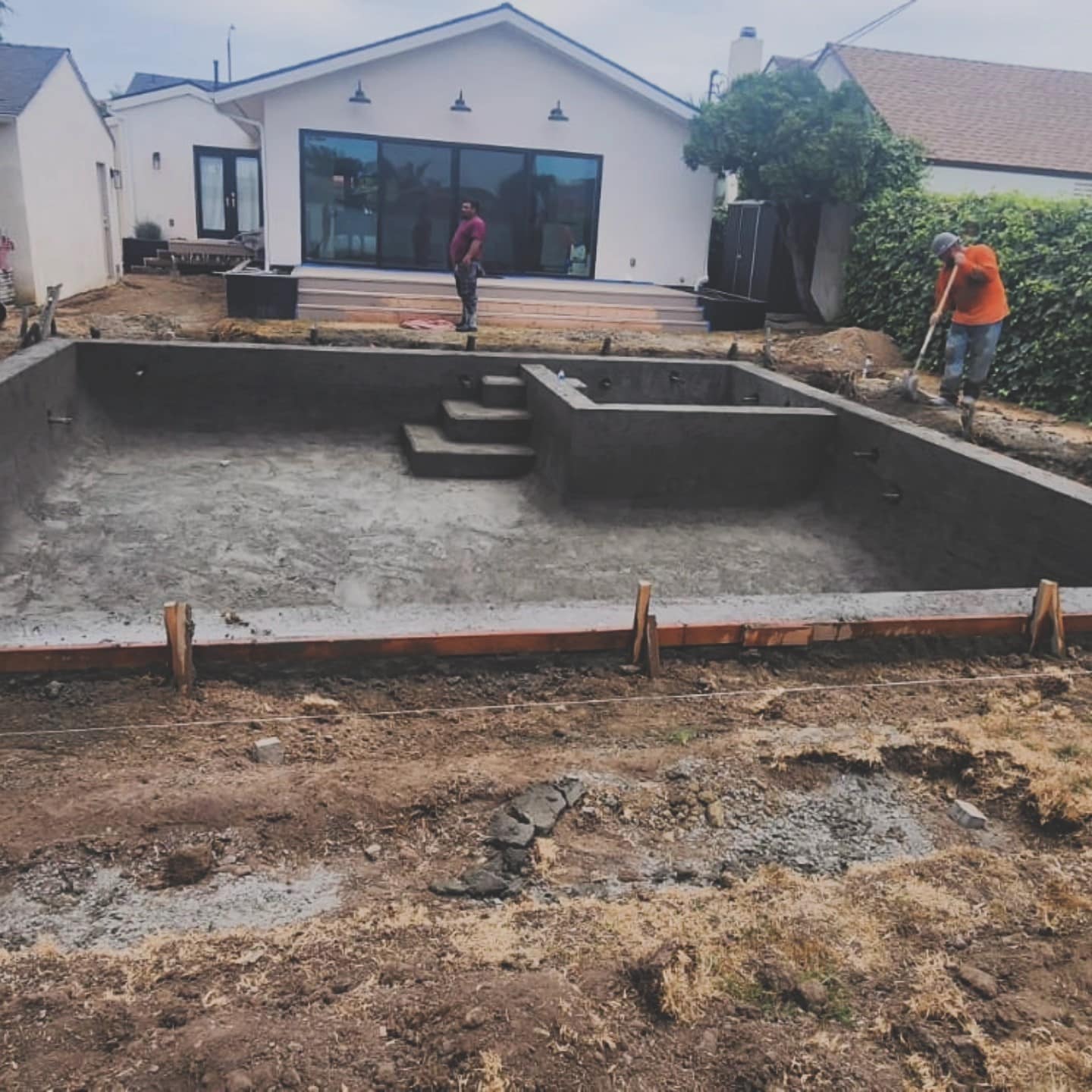
Custom concrete pool construction in Los Angeles
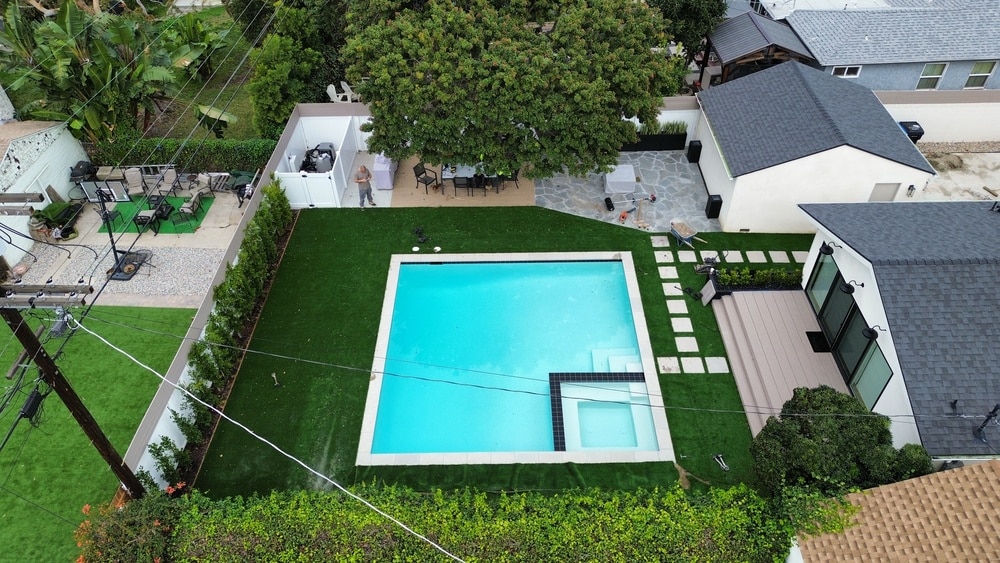
Custom concrete pool construction in Los Angeles
Concrete Pool Advantages and Disadvantages
Advantages of Concrete Pools
- Custom shape, size, and depth
- Works with many yard layouts
- Wide range of tile and finish options
- Ideal for integrated spas and water features
- Can support detailed architectural designs
- Suitable for complete luxury backyard projects
Disadvantages of Concrete Pools
- Longer on-site construction process
- May require more surface cleaning
- Interior finishes may need future care
- Custom features can increase project cost
- More project stages may be affected by weather or inspections

Fiberglass Pool Advantages and Disadvantages
Advantages of Fiberglass Pools
- Smooth interior surface
- Factory-controlled shell production
- Fewer on-site shell construction stages
- Often easier to brush and clean
- Many models include steps and seating
- Works well for homeowners who like an existing design
Disadvantages of Fiberglass Pools
- Limited to available shell models
- Shape and depth cannot be fully customized
- Delivery access may limit pool size
- Large shells may require lifting equipment
- Surface repairs may require careful color matching
Which Pool Is Best for You?
Choose a concrete pool when custom design is your top priority. It may be the right choice when the pool must fit an unusual property or include detailed features.
A concrete pool may suit you when:
- You want a unique shape or depth
- You need a pool designed around a narrow or hillside yard
- You want an attached spa or custom water feature
- You prefer a specific tile, plaster, or aggregate finish
- You are planning a complete luxury backyard remodel
Choose a fiberglass pool when you like an available shell model and want a smooth surface with simpler routine care.
A fiberglass pool may suit you when:
- You are happy with a preset shape and size
- You want a smooth interior surface
- You prefer fewer on-site shell construction stages
- Your property has enough shell-delivery access
- You want built-in steps, seating, or a ledge included in the model
Questions to Ask Before Choosing a Pool
Before making your decision, discuss these questions with a qualified pool contractor:
- Which pool type works best with my yard and access?
- Can the pool fit within local setbacks?
- Will the property need engineering or soil review?
- Which features are most important to my family?
- How will the pool connect with the patio and landscape?
- What permits and inspections will be required?
- What is included in the project proposal?
- What routine care will each pool type need?
- What warranties apply to the shell, structure, finish, and equipment?
- How will drainage be handled around the pool?
Plan the Whole Backyard, Not Just the Pool
The best pool should feel connected to the home and the rest of the yard. Before choosing a shell or pool shape, think about how people will move through the space.
Consider the location of doors, seating, shade, dining areas, plants, and walkways. Also plan for pool equipment, storage, lighting, drainage, and privacy.
A complete design can prevent the pool from feeling crowded or separate from the rest of the property. It can also create a better balance between swimming areas and usable deck space.
Explore Green Advisor Inc.’s landscaping and outdoor living solutions for ideas beyond the pool itself.
Concrete vs. Fiberglass Pools: Final Decision
The choice between concrete vs. fiberglass pools comes down to your priorities.
Concrete offers greater freedom in shape, size, depth, finish, and integrated features. It is often the best choice for highly custom designs and full backyard transformations.
Fiberglass offers a smooth surface and a factory-made shell. It can be a strong option when an available model fits the property and the homeowner’s needs.
Neither choice is automatically better. The best pool is the one that fits your yard, lifestyle, design goals, care preferences, and complete project budget.
Green Advisor Inc. can review your property and help you compare both options. Contact our team to begin planning a custom pool and outdoor living space in Los Angeles.
Schedule a Pool Design Consultation
Concrete vs. Fiberglass Pool FAQs
Is a concrete or fiberglass pool better?
Neither pool type is best for every property. Concrete is ideal for custom shapes, depths, finishes, and integrated features. Fiberglass is ideal when you prefer a smooth surface and an available factory-made design.
Which pool is easier to maintain?
Fiberglass pools often need less surface brushing because the gelcoat is smooth and nonporous. However, both pool types need water testing, cleaning, equipment care, and balanced chemistry.
Can fiberglass pools have spas and Baja shelves?
Yes. Many fiberglass pool models include seating, steps, ledges, and spa-style features. The available design depends on the shell manufacturer and model.
Can a concrete pool have any shape?
Concrete offers extensive design freedom. However, the final shape must still meet property, engineering, access, setback, and permit requirements.
Which pool works better in a small backyard?
Either option may work in a small yard. Concrete can be shaped around tight spaces. Fiberglass can work well when a compact shell fits the yard and can be delivered to the site.
Which pool is installed faster?
Fiberglass generally has fewer on-site shell construction stages because it arrives as a finished unit. The complete schedule still depends on permits, access, excavation, utilities, decking, inspections, and landscaping.
Which pool lasts longer?
Both pool types can offer long-term use when properly installed and maintained. Installation quality, drainage, equipment, water care, surface condition, and repairs all affect the useful life of a pool.
Do both concrete and fiberglass pools need permits?
Inground pool projects commonly require local review, permits, inspections, and safety measures. Requirements vary by city and property, so homeowners should confirm current rules before construction.
Can the pool be included in a full backyard remodel?
Yes. Green Advisor Inc. can coordinate the pool with pavers, landscaping, artificial turf, patios, outdoor kitchens, lighting, retaining walls, and seating areas.
How do I choose the right pool contractor?
Choose a contractor who can review the property, explain both pool systems, provide a clear project scope, discuss permits, and plan the pool with the surrounding yard.